

Celiac Disease vs. Wheat Allergy: Diagnostic Insights from a Leading Gastroenterologist in Mira Road
With the growing popularity of wellness trends, many people eliminate wheat and gluten from their diets whenever they experience bloating, sluggish digestion, or fatigue. However, the complexity of Gluten-Related Disorders means cutting out gluten without clinical testing can obscure serious underlying medical conditions.
Jump To
- Celiac Disease (Autoimmune Damage)
- Wheat Allergy (IgE-Mediated)
- Non-Celiac Gluten Sensitivity (NCGS) (Functional Discomfort)
- Why Celiac Disease Is an Autoimmune Disorder, Not a Simple Food Sensitivity
- The Golden Diagnostic Rule: Test Before You Eliminate
- Comprehensive Dietary & Medical Management at Gastronaut Clinic
Gluten-related digestive disorders fall into three distinct categories:
Celiac Disease (Autoimmune Damage) |
Wheat Allergy (IgE-Mediated) |
Non-Celiac Gluten Sensitivity (NCGS) (Functional Discomfort) |
|
• Immune response targets gluten. |
• Classic allergic reaction. |
• Symmetric functional distress. |
Consulting an experienced gastroenterologist in Mira Road before changing your diet is vital to secure an accurate diagnosis and prevent long-term nutritional deficiencies.
Why Celiac Disease Is an Autoimmune Disorder, Not a Simple Food Sensitivity
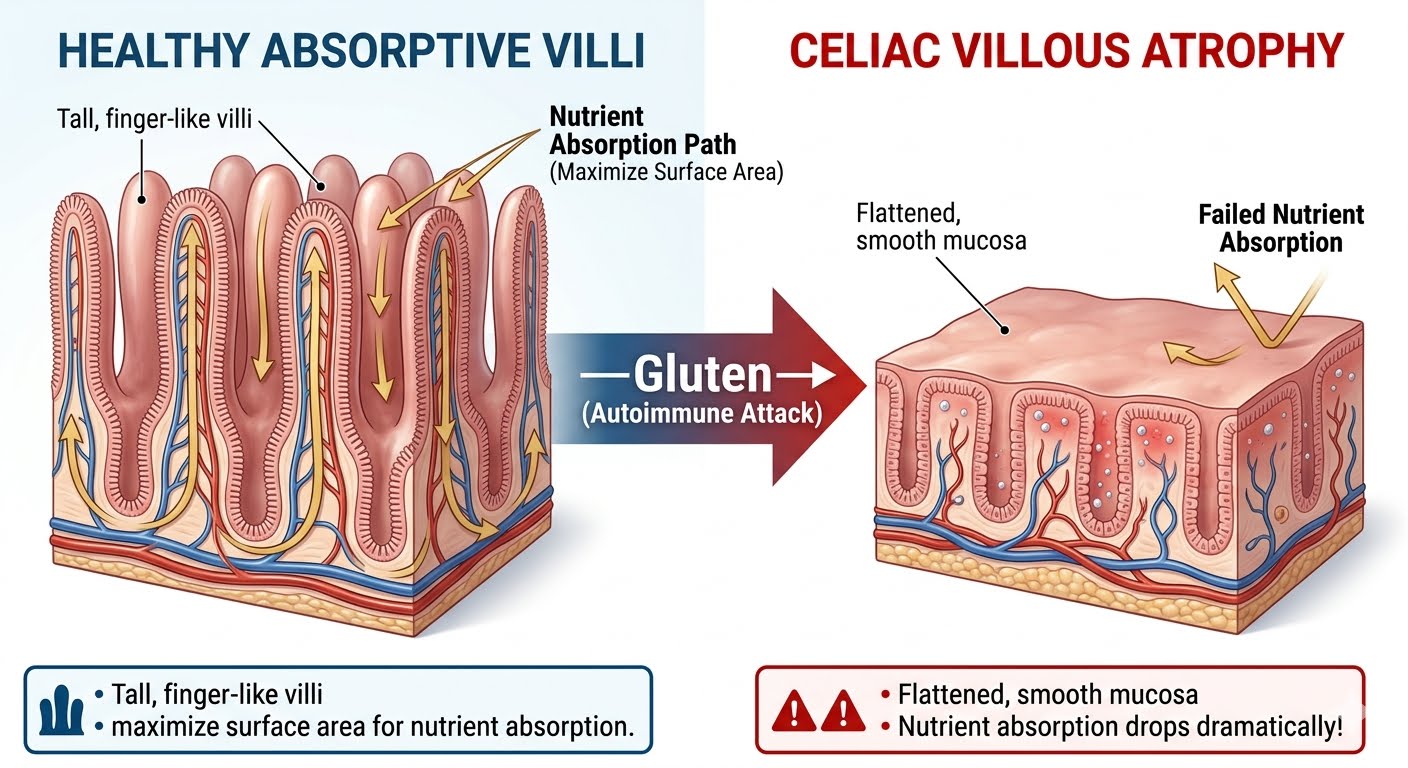
When an individual with celiac disease consumes gluten (a storage protein in wheat, barley, and rye), the immune system triggers an inflammatory response in the small intestine. This response attacks and flattens the intestinal villi—the microscopic, finger-like projections responsible for absorbing vitamins, minerals, iron, and fats.
In adults, celiac disease rarely presents with obvious malnutrition alone. More commonly, it manifests subtly through:
- Refractory Iron-Deficiency Anemia: Low hemoglobin that fails to improve with oral iron supplements.
- Early-Onset Osteopenia or Osteoporosis: Poor calcium and Vitamin D absorption weakening bone density.
- Recurrent Aphthous Mouth Ulcers: Painful, recurring sores inside the mouth.
- Chronic Unexplained Fatigue and Brain Fog: Caused by continuous low-grade inflammation and malabsorption.
- Elevated Liver Enzymes (Celiac Hepatitis): Unexplained ALT/AST elevations that resolve once gluten is removed.
The Golden Diagnostic Rule: Test Before You Eliminate
A critical medical pitfall is starting a gluten-free diet before completing diagnostic testing. Once gluten is removed from meals, antibodies decline and the intestinal lining begins to heal, which can produce false-negative test results.
1. Serological Screening – Anti-Tissue Transglutaminase (anti-tTG IgA) & Total Serum IgA
2. Confirmatory Upper GI Endoscopy – High-definition visualization of duodenal scalloping and grooving
3. Multiple Duodenal Mucosal Biopsies – 4 to 6 biopsies evaluated using the Marsh Histopathological Scale
Comprehensive Dietary & Medical Management at Gastronaut Clinic
If celiac disease is confirmed, management involves establishing a strict, lifelong gluten-free lifestyle alongside nutritional rehabilitation:
- Correcting underlying micronutrient deficiencies (Iron, B12, Folate, Zinc, Vitamin D3).
- Identifying hidden sources of gluten in packaged food additives, sauces, and medications.
- Monitoring anti-tTG antibody levels annually to track internal mucosal recovery.
Residents across Mira Road, Dahisar, and Bhayandar can rely on Dr. Raajeev Hingorani at Gastronaut Clinic, widely regarded as a top gastroenterologist in Mira Road and gastroenterologist in Mumbai, for structured celiac evaluations and long-term care.
Key Takeaways
- Gluten-related digestive disorders are categorized into Celiac Disease, Wheat Allergy, and Non-Celiac Gluten Sensitivity.
- Celiac disease causes the immune system to attack and flatten intestinal villi in response to gluten consumption, leading to malabsorption.
- Symptoms of celiac disease in adults often include refractory iron-deficiency anemia, early-onset osteopenia, and chronic unexplained fatigue.
- Diagnostic testing for gluten-related disorders should be conducted before initiating a gluten-free diet to avoid false-negative results.
- Management of confirmed celiac disease includes lifelong elimination of gluten and addressing nutritional deficiencies that may arise.
